Happy Smiley Flowers Spring: A Merch Design Review
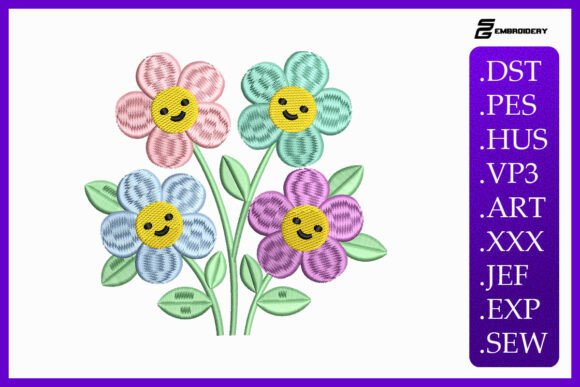
As an embroidery designer who regularly consults with small businesses on merchandise development, I approach every new machine embroidery design with a critical eye toward production viability and brand alignment. When evaluating the Happy Smiley Flowers Spring collection for commercial application, my first impression is one of accessible warmth and distinct visual clarity. This is not merely a decorative floral motif; it is a strategic graphic asset. The kawaii-inspired aesthetic, featuring four vibrant daisies with smiling faces, communicates immediate friendliness and approachability. For businesses in the service, creative, or wellness sectors, this design bridges the gap between professional branding and community connection.
From a technical standpoint, the multi-colored nature of these daisies suggests a design that relies on color blocking rather than complex shading gradients. This is excellent news for commercial embroidery. Designs that utilize solid fills and clear outlines digitize more reliably across different fabric types and reduce the risk of registration errors during high-volume production runs. The "spring" theme offers seasonal relevance, but the cheerful facial expressions ensure the design retains its value as a year-round mascot or logo accent for brands targeting families, children, or lifestyle markets.
Strategic Applications for Small Business Merchandise
When integrating Happy Smiley Flowers Spring into a product line, versatility is key. Based on the botanical layout and character elements, this design performs exceptionally well in specific business contexts where customer engagement is paramount.
- Café and Bakery Staff Uniforms: The playful nature of the design softens the formality of staff apparel. Used as a left-chest logo on polo shirts or centered on aprons, it reinforces a welcoming atmosphere. For apron embroidery, the multi-colored daisies provide a pop of color against neutral canvas or denim backgrounds, making staff easily identifiable while maintaining a cohesive team look.
- Boutique Tote Bags and Packaging: As a tote bag design, this artwork serves as both branding and a standalone product. Customers are more likely to reuse a bag featuring adorable, high-quality embroidery than one with a generic corporate logo. It transforms packaging into a keepsake, extending brand visibility beyond the initial purchase.
- Pet Brand Accessories: The kawaii style translates seamlessly to pet merchandise. Bandanas, pet beds, or owner-matching caps featuring Happy Smiley Flowers Spring tap into the emotional connection pet owners have with their animals. The friendly faces mirror the personality many owners attribute to their pets.
- Event and Market Merch: For florists, crafters, or market vendors, this design works beautifully as an embroidered patch. Patches allow customers to customize their own jackets or bags, creating an interactive retail experience. The distinct outline of the daisies ensures the patch remains legible even when scaled down.
Technical Considerations for Production Success
While the visual appeal of Happy Smiley Flowers Spring is evident, successful execution requires careful attention to technical constraints. As a designer, I must emphasize that cute does not always mean simple. The inclusion of facial features introduces complexity that demands precision.
Navigating Stitch Density and Fabric Texture
The primary challenge with kawaii-style botanical designs is balancing detail with durability. Facial features require tight satin stitches or fine running stitches to maintain definition. If the stitch density is too high, you risk perforating the fabric or causing puckering, especially on lightweight knits used for t-shirts or summer apparel. Conversely, if the density is too low, the smile may disappear after washing.
For custom apparel made from textured fabrics like pique polos or linen aprons, the texture can compete with the delicate details of the flower faces. In these cases, I recommend using a water-soluble topping stabilizer to create a smooth surface for the needle. Always verify the recommended hoop size before purchasing the digital embroidery file. Attempting to resize a design with intricate facial details by more than 10-15% can distort the expression, turning a happy daisy into an unrecognizable blob.
Cap Embroidery and Curved Surfaces
If applying Happy Smiley Flowers Spring to caps, proceed with caution. Cap fronts are curved and often structured, which distorts circular shapes. Daisies are inherently round; when embroidered on a curved cap front without compensation, they may appear oval or warped. Test the design on a scrap cap first. You may need to adjust the pull compensation settings in your software or choose a placement slightly lower on the crown where the curve is less severe. Additionally, ensure the thread colors selected offer sufficient contrast against the cap material. Pastel threads on white caps may lack the visual punch needed for outdoor visibility.
Brand Identity and Customer Perception
Merchandise is a tangible extension of your brand identity. Using Happy Smiley Flowers Spring signals that your business values joy, accessibility, and human connection. However, consistency is vital. This design should complement, not clash with, your existing visual assets.
For handmade brands and Etsy sellers, this embroidery adds perceived value. A machine-stitched, professionally finished emblem suggests care and quality control that heat transfers or screen prints sometimes lack. It elevates a handmade product from "crafty" to "boutique." However, be mindful of context. While perfect for bakeries, daycares, or gift shops, this specific kawaii aesthetic might undermine authority for law firms, financial advisors, or luxury spa services. Always evaluate whether the emotional tone of the design aligns with the trust and professionalism your specific industry requires.
Essential Pre-Production Checklist for Designers
Before committing Happy Smiley Flowers Spring to a full production run for your small business merch, follow this professional validation protocol to protect your investment and reputation.
- Verify Commercial Licensing: Never assume a digital embroidery file includes rights for resale or branded merchandise. Check the license terms explicitly. Some designers permit personal use only, while others offer tiered commercial licenses for small businesses versus large-scale manufacturing.
- Create a Printable Mockup: Before stitching, place the digital file over photos of your actual products. Does the scale feel right? Do the colors match your brand palette? A printable mockup helps secure client approval or internal sign-off without wasting thread and time.
- Test on Real Substrates: Do not rely solely on test stitches on felt or muslin. Embroider the design on the exact garment or item you intend to sell. Wash and dry the test piece three times. Inspect the facial details for thread breaks, shrinkage, or loss of definition. Durability is non-negotiable for paid merchandise.
- Audit Thread Contrast: View the test stitch-out in natural light and artificial store lighting. Ensure the black outlines (if present) are crisp and the multi-colored petals do not bleed visually into one another. Poor contrast kills the "kawaii" effect instantly.
- Check Spacing and Registration: Zoom in on the finished sample. Are the eyes centered? Is the smile symmetrical? Even minor digitizing flaws become glaring defects when multiplied across fifty uniforms or tote bags. If registration is off, contact the digitizer or adjust the file before bulk production.
Ultimately, Happy Smiley Flowers Spring represents a high-potential asset for businesses seeking to infuse personality into their physical touchpoints. By treating this design with the same technical rigor as a corporate logo, you ensure that the final finished product delivers both emotional resonance and professional quality. Whether used as a signature patch, a uniform accent, or a retail add-on, this botanical design can effectively translate digital charm into tangible brand loyalty when executed with intention and care.