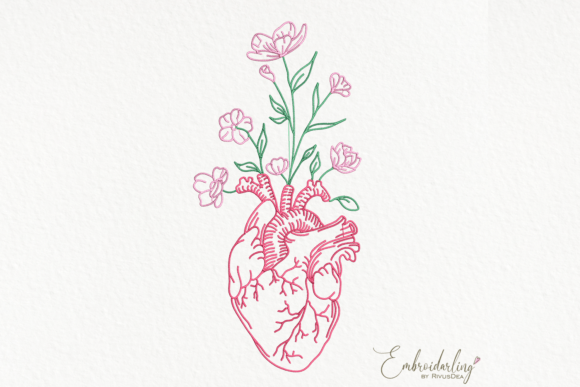
Realistic Human Heart with Flowers: A Stitch Test
When I first loaded the Realistic Human Heart with Flowers machine embroidery design into my software, I wasn't just looking at a digital file; I was evaluating a potential bestseller for my upcoming anatomical art collection. As designers and makers, we know that a screen preview rarely tells the whole story. The true test of any embroidery file happens when the needle hits the fabric. This review breaks down my practical experience stitching out this design, specifically focusing on its viability for commercial products like custom apparel and personalized gifts.
First Impressions and Artistic Mood
The aesthetic of this design strikes a delicate balance between clinical accuracy and romantic softness. In the category of Outline Flowers, it is easy for designs to feel flat or cartoonish. However, the Realistic Human Heart with Flowers carries a distinct visual weight. The juxtaposition of the anatomical heart structure against the organic flow of floral elements creates a mood that is both edgy and tender. For an Etsy seller or boutique owner, this duality is gold. It appeals to customers looking for alternative wedding gifts, medical student graduation presents, or simply unique handmade products that stand out from generic floral motifs.
Visually, the layout feels intentional rather than cluttered. The flowers do not merely sit on top of the heart; they appear integrated into the composition. This integration is crucial for stitch clarity. When I reviewed the digital worksheet included with the file, the color separation suggested a logical stitching order that would prevent unnecessary trims and jumps, which is a major time-saver for small business production runs.
Real-World Application: The Sweatshirt Test
To truly evaluate this design, I decided to stitch it onto a heavyweight cotton sweatshirt intended for a mockup in my shop. Custom apparel requires durability and comfort, so my primary concern was how the stitch density would interact with the fleece backing.
I selected the mid-range size from the six included options. The variety of sizes is a significant asset here. Having multiple hoop size options means I didn't have to manually resize the design, which can often distort satin stitches or alter fill stitch coverage. The embroidery file performed exceptionally well on the sweatshirt. The running stitches defining the anatomical details remained crisp despite the textured fabric surface. Often, realistic designs lose their definition on fleece, but the contrast between the outline work and the floral fills maintained excellent legibility.
For those creating tote bag designs or patches, the larger sizes provided in the pack offer enough detail to remain striking even when viewed from a distance. Conversely, the smaller sizes are perfectly suited for baby embroidery or pocket placements on shirts, provided you verify the minimum readable size for the intricate vessel details.
Technical Performance and Fabric Considerations
While the Realistic Human Heart with Flowers stitched out beautifully on stable cotton fleece, caution is required for other substrates. Because this design combines detailed line work with floral elements, the stitch density varies significantly across the pattern.
- Stretchy Fabrics: If you are planning sweatshirt embroidery or t-shirt projects using lightweight jersey, use a high-quality cut-away stabilizer. The transition points between the dense heart sections and lighter flower outlines can cause puckering if the fabric isn't adequately supported.
- Textured Surfaces: On tea towels or linen, the fine details of the human heart anatomy shine. However, avoid highly textured terry cloth unless you use a water-soluble topping. Without it, the running stitches may get lost in the pile, diminishing the realistic effect.
- Dark vs. Light Fabrics: I tested the design on both black and white garments. On dark fabrics, ensure your thread colors have sufficient value contrast. The anatomical shading relies on subtle color shifts that can disappear against navy or charcoal backgrounds. Always run a black-and-white mockup or a physical test stitch to confirm visibility.
The inclusion of PES, HUS, JEF, VP3, XXX, and DST formats ensures compatibility across almost all commercial and hobbyist machines. As a professional, I appreciate not having to convert files myself, as conversion can sometimes alter stitch parameters. The PDF worksheet is equally valuable; it serves as a reliable roadmap for thread colors and placement, reducing guesswork during production.
Commercial Viability for Makers and Sellers
For creative entrepreneurs, the question is always: "Will this sell?" Based on my assessment, the Realistic Human Heart with Flowers has strong commercial potential. It fits current trends favoring cottage-core aesthetics mixed with dark academia or scientific illustration styles.
This design works particularly well for niche markets. Consider using it for:
- Medical & Nursing Gifts: Graduation hoodies or clinic staff appreciation items.
- Memorial Products: The combination of heart and flowers offers a respectful, non-traditional option for remembrance pillows or keepsakes.
- Boutique Branding: As a signature graphic for shops focusing on biology-inspired art or sustainable fashion.
However, professionalism matters. Before listing any finished product, verify your licensing terms. While the file is a robust digital asset for physical goods, confirm whether the license permits use in printable mockups or digital product previews if you plan to sell the design itself or related templates. Customer trust is built on consistent quality, so never skip the test stitch on the actual garment type you intend to sell.
Designer Notes for Optimal Results
After completing my test project, I have compiled several practical notes for anyone adding this embroidery project to their queue. These insights come directly from hands-on experience and are intended to save you time and thread.
Check Your Hoop Size Early: With six sizes available, measure your target area precisely before hooping. There is nothing worse than realizing mid-project that the largest size is 0.5 inches too wide for your safe stitch zone on a cap or collar.
Thread Color Selection: Do not rely solely on the chart. Anatomical realism depends on accurate reds, pinks, and blues for veins and arteries. Compare your physical thread inventory against the PDF worksheet under natural lighting. Digital screens often misrepresent these specific hues.
Stabilizer Strategy: Treat this as a mixed-media design. Even though it falls under Outline Flowers, the realistic heart component likely contains fill stitches that require more stabilization than a standard outline motif. I recommend a medium-weight cut-away for apparel and a tear-away only for very stable, non-stretch woven fabrics.
Detail Inspection: Zoom in on the smallest size in your editing software before stitching. Ensure that the tiny valves and vessels of the heart haven't merged into a solid mass of stitches. If they have, opt for the next size up. Clarity is more important than fitting a specific dimension.
Final Verdict on Usability
The Realistic Human Heart with Flowers is more than just a novelty graphic; it is a versatile, technically sound embroidery file suitable for serious makers. Its strength lies in its ability to bridge the gap between scientific illustration and decorative art, making it a unique offering for craft businesses and hobbyists alike.
Whether you are producing holiday embroidery for niche gift markets or expanding your custom apparel line, this design delivers on both aesthetic appeal and stitch-out reliability. Just remember to respect the technical requirements of your chosen fabric and utilize the provided resources like the PDF worksheet and multiple size options. When executed with care, this design transforms a simple garment or accessory into a compelling piece of wearable art that resonates with buyers seeking something genuinely different.